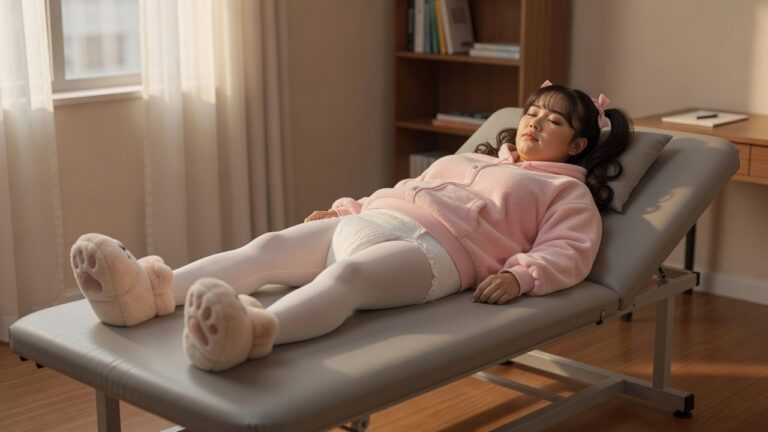

Why Do I Get Aroused by Baby Talk and Age Play?
If you have ever felt a wave of arousal during baby talk, age play, or while wearing a diaper, and then immediately felt confused, ashamed, or even alarmed by your own reaction, you are asking a very human question: why does this happen to me? You are not broken, you are not dangerous, and you are not alone. Understanding ABDL arousal is one of the most common reasons people first reach out for support, and the honest psychological answer is far gentler and more ordinary than the shame spiral your brain may have led you into.
The Short Answer
You get aroused by baby talk and age play because your brain has linked feelings of safety, vulnerability, comfort, surrender, and care with your body’s natural arousal system. This is a normal form of conditioning and emotional association. For many ABDL adults, arousal is not really about diapers or babyish things in a literal sense. It is about the powerful emotional states those things unlock: being cared for, letting go of control, feeling small and protected, and experiencing a kind of total acceptance. Arousal is one of the ways the human body responds to intense emotional relief and connection. It does not mean anything is wrong with you, and it does not say anything about who you are as a person.
Is It Normal to Feel Aroused by ABDL Themes?
Yes. Arousal connected to ABDL themes is extremely common and well documented among adults who identify as adult babies or diaper lovers. The human arousal system is not a narrow, purely physical mechanism. It is deeply tied to emotion, memory, novelty, relief, and psychological safety. When something produces a strong emotional shift in us, the body often responds physically too, and arousal is one of those responses.
It helps to remember that arousal in humans is wired to many things that have nothing to do with reproduction. People experience arousal from fear (think of thrill rides or horror movies), from comfort, from power dynamics, from particular textures and sensations, and from emotional intensity of all kinds. The brain does not keep a tidy filing system that separates “things I find emotionally meaningful” from “things my body reacts to.” They overlap constantly. So if baby talk or age play moves you emotionally, it is entirely understandable that your body might respond as well.
If you want a broader perspective on whether your interests are within the range of normal human experience, our article on whether being ABDL is normal walks through what researchers and clinicians actually understand about this community.
What Is Actually Happening in My Brain and Body?
Let us break down the psychology calmly, because understanding the mechanism is often the fastest path to relief from shame.
Emotional states drive physical responses
When you engage with baby talk or age play, you may experience a sudden release of tension. The constant pressure of adult life (responsibility, performance, self monitoring, vigilance) can briefly dissolve. That release is genuinely pleasurable in a deep, full body way. The nervous system shifts out of a guarded state and into a softer, more open one. For many people, that profound shift toward safety and calm registers in the body as arousal, warmth, tingling, or excitement. It is the body saying “this feels good and I want more of it.”
Association and conditioning
Human beings learn through association. If, at some point, the feelings of comfort, smallness, or being cared for happened to coincide with arousal, your brain may have linked them. Over time that link strengthens, the same way a particular song can reliably bring back a memory or a mood. This is ordinary neuroscience, not a flaw. It also explains why the specific triggers vary so much from person to person. One person responds strongly to the soft language of baby talk, another to the physical sensation of a diaper, another to the dynamic of being looked after by a caregiver figure.
Surrender and the relief of letting go
A huge part of ABDL arousal is about surrendering control. Adults carry an enormous load of decision making and self management. The chance to set that down, to be guided, to be allowed to simply receive care, is profoundly relieving. Arousal frequently follows surrender because the body interprets that drop in defensiveness as deep safety. This is the same reason intimacy and trust tend to heighten physical responses generally.
Does Arousal Mean My ABDL Side Is Sexual?
Not necessarily, and this is one of the most important things to understand. For many people in the community, the ABDL experience is primarily emotional, comforting, and regressive rather than sexual. The presence of occasional arousal does not automatically convert the whole experience into a sexual one. Arousal is simply one possible body response among many, including peace, sleepiness, giddiness, or tearful relief.
ABDL experiences tend to fall along a spectrum. Some people connect with it almost entirely through emotional regression and the comfort of little space, a headspace where adult worries fade and a younger, softer state of mind takes over. Others experience a more sensory or physical pull. And some experience both, sometimes shifting over time or even within a single session. All of these are valid. There is no “correct” way to be ABDL, and the amount of arousal you feel does not make your identity more or less legitimate.
It is also worth saying clearly: this entire experience is about consenting adults exploring their own inner emotional world. Age play among adults is a form of role and headspace, a way of accessing comfort and care. It has nothing to do with anyone other than the adults choosing to engage in it. To understand the emotional regression piece more fully, our guide to age regression explains the difference between the headspace and the body response.
Why Do I Feel Ashamed Even Though It Feels Good?
The shame usually does not come from the arousal itself. It comes from the story you have been taught about what arousal is supposed to mean and what it is supposed to be attached to. Most of us grow up with extremely narrow cultural scripts about sexuality and about what adults “should” find appealing. When your experience does not match that script, the brain panics and reaches for the harshest available explanation. That panic is learned, not true.
Here is the part that genuinely helps people: arousal is morally neutral. It is a physical signal, like hunger or a shiver. It carries no message about your worth, your character, or your safety to others. What matters is how you behave, the consent and care you bring to your relationships, and whether your choices are honest and healthy. By those measures, the vast majority of ABDL adults are thoughtful, ethical, gentle people who simply found a source of comfort that the wider world has not yet learned to understand.
If shame and guilt are weighing on you, you are far from alone, and there are concrete ways to loosen their grip. Our article on how to stop ABDL shame and guilt offers practical, compassionate steps that many people find steadying.
Where Does ABDL Arousal Come From?
People often want a single origin story, and the honest answer is that there usually is not one. ABDL interests, including the arousal component, tend to emerge from a combination of factors that researchers and clinicians are still studying. Common contributing threads include:
- A natural temperament that craves deep comfort, softness, and emotional safety
- Early associations between comfort objects, care, and feeling secure
- The body learning to link relaxation and surrender with pleasurable physical sensation
- A need to regulate stress that finds expression through regression and being cared for
- Ordinary variation in human desire, which is far wider than mainstream culture admits
Importantly, having an ABDL identity is not evidence of trauma. Some people connect their interest to specific life experiences, and others have always felt this way with no clear cause at all. Both are completely normal. You do not owe anyone an origin story, and you do not need to “solve” or explain your arousal in order to deserve peace with it.
How Can I Make Peace With My ABDL Arousal?
Acceptance is a process, and it usually goes more smoothly with a few intentional practices.
Separate the feeling from the judgment
When arousal appears, try noticing it the way you would notice any other body sensation. “My body is responding. That is information, not a verdict.” This small reframe interrupts the automatic shame reflex and gives you room to breathe.
Get curious instead of critical
Ask yourself what emotional need is being met in the moment. Is it rest? Safety? Permission to stop performing? Tenderness? Understanding the underlying need often matters more than the surface trigger, and it can help you meet that need in healthy, sustainable ways.
Find informed, nonjudgmental support
Talking with someone who understands the ABDL community can transform months of silent worry into a single relieving conversation. Working with knowledgeable counselors who already understand age regression and diaper interests means you never have to start by defending your basic worth. You can skip straight to living well.
Frequently Asked Questions
Is ABDL arousal harmful or dangerous?
No. ABDL arousal involves consenting adults and their own emotional and physical responses. It is a private, harmless variation of human desire. What makes any behavior healthy is consent, honesty, and care, all of which are entirely compatible with being ABDL.
Will the arousal go away if I ignore it?
Suppression rarely works and usually increases distress and shame. Most people find far more relief through understanding and acceptance than through trying to erase the response. Integration tends to bring peace, while resistance tends to bring struggle.
Can I be ABDL without experiencing arousal at all?
Absolutely. Many adults connect with ABDL purely for comfort, stress relief, and emotional regression, with little or no arousal involved. The community is wide, and your experience is valid wherever it falls on the spectrum.
Does this mean something is wrong with how I was raised?
Not at all. ABDL interests appear in people from every kind of background. There is no single cause and no fault. Your interest is simply part of the rich variety of human emotional and physical experience.
If you take one thing from this article, let it be this: your ABDL arousal is a normal, understandable part of who you are, not a problem to be feared. You deserve to understand yourself with warmth, to set down the shame, and to build a life where this part of you brings comfort rather than worry. You are welcome here, exactly as you are.
Talk to Someone Who Understands
You do not have to figure any of this out alone. The counselors at ABDL Therapy have personal or family experience with this community, and there is no judgment, only support to help you embrace, understand, and live your best life.
Call (888) 771-2235
Available 24/7. Sessions from $22. Completely confidential.