
What It Really Means to Be an Adult Baby or Diaper Lover in 2026
So What Does ABDL Actually Stand For?
ABDL stands for Adult Baby Diaper Lover. It describes a community of adults who find comfort, pleasure, stress relief, or emotional connection through wearing diapers, engaging in age play, practicing regression, or embracing a younger headspace. If you have been searching “what is ABDL” or “Adult Baby Diaper Lover explained,” you have landed in the right place. This is not a clinical textbook definition. This is the real, honest, human explanation of what it means to be an Adult Baby or Diaper Lover in 2026.
Your ABDL identity is not something that happened to you. It is something that is part of you, as natural as any other desire or need. Understanding it is not about fixing yourself. It is about finally giving yourself permission to be whole.
The ABDL identity is far more common than most people realize. Online communities number in the hundreds of thousands. Therapists and counselors who specialize in this area, like the team at ABDL Therapy, receive calls every single day from people across every demographic you can imagine. Doctors, teachers, engineers, parents, college students, retirees. There is no single “type” of person who identifies as ABDL. It crosses every gender, orientation, age group, and background.
The ABDL Spectrum: It Is Not One Thing
One of the most common misconceptions about the ABDL identity is that everyone in the community wants the same thing. That could not be further from the truth. ABDL exists on a wide spectrum, and understanding where you fall on that spectrum is one of the most empowering things you can do for yourself.
Adult Baby (AB)
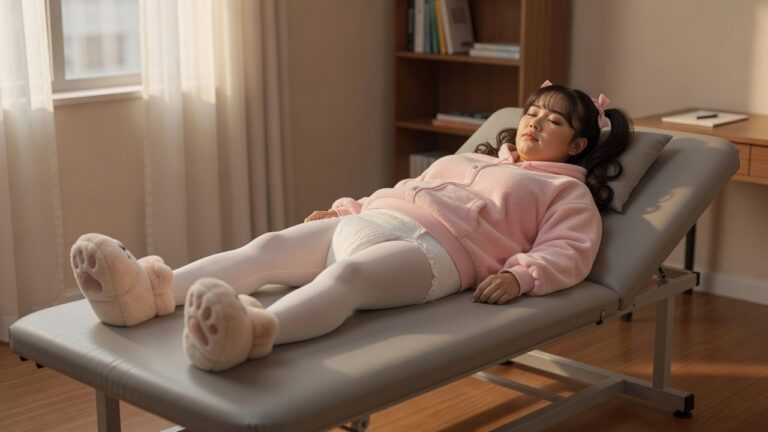
An Adult Baby is someone who enjoys regressing to an infant or toddler headspace. This might include wearing diapers, using a pacifier, drinking from a bottle, wearing onesies, sleeping in a crib, or being cared for by a partner or caregiver. For many Adult Babies, regression is a deeply soothing experience that helps them manage adult stress, anxiety, or trauma. Age play can be a private, solo practice or something shared with a trusted partner. It is not about being immature or refusing to be an adult. Most Adult Babies are highly functional people who use regression as a deliberate, healthy coping tool.
Diaper Lover (DL)
A Diaper Lover is someone whose primary interest centers on diapers themselves. This can be a sensory experience (the feeling of wearing a diaper, the warmth, the security), a fetish (sexual arousal connected to diapers), or simply a comfort preference. Many Diaper Lovers do not engage in age play at all. They are adults who enjoy wearing diapers. Full stop. The diaper fetish aspect is just one piece of the Diaper Lover identity, and not everyone with DL feelings experiences it the same way.
Age Play and Regression
Age play is the practice of intentionally adopting a younger headspace or role. This can range from feeling like a toddler to acting like a young child, and it can happen alone or with a partner who takes on a caregiving role. Regression therapy, in a clinical sense, refers to therapeutic techniques that access earlier emotional states. In the ABDL context, regression is often self directed and used as a form of emotional release, comfort, or stress management. Many people who practice age play describe it as one of the most effective anxiety reducers they have ever found.
Diaper Fetish
Some people experience a straightforward diaper fetish, where diapers are connected to sexual arousal. This is a valid and common experience. It does not require any age play component, and it exists separately from the Adult Baby identity for many people. If you feel turned on by diapers, that is a recognized, well documented variation of human sexuality. You are not alone, and there is nothing wrong with you.
Incontinence Connection
A significant portion of the ABDL community includes people who wear diapers due to incontinence, whether from medical conditions, aging, surgery, or disability. For some of these individuals, what started as a medical necessity evolved into something more complex emotionally. Others in the community intentionally practice incontinence as part of their ABDL lifestyle. Our counselors work with people across this entire range without judgment.
Why Do People Have ABDL Feelings?
This is the question everyone asks, and the honest answer is: there is no single cause, and that is completely fine. Researchers and therapists who work with the ABDL community have identified several common threads, but none of them are universal. Some people trace their Adult Baby or Diaper Lover feelings back to very early childhood memories. Others developed these interests during puberty. Some discovered ABDL later in life, sometimes after a stressful period or major life change.
The Science of Comfort and Regression
What we do know is that regression and comfort seeking are deeply human behaviors. When we are stressed, our brains often seek out sensory experiences associated with safety and nurturing. For some people, that means comfort food. For others, it means curling up under a heavy blanket. For Adult Babies and Diaper Lovers, it means diapers, pacifiers, soft clothing, or a caregiver dynamic. The neuroscience behind this is straightforward: these experiences activate the parasympathetic nervous system, reducing cortisol and promoting feelings of safety. It is the same mechanism behind weighted blankets, swaddling infants, and other widely accepted comfort practices.
The difference is simply the specific form the comfort takes. And that difference says nothing about your maturity, your mental health, or your worth as a person.
How Common Is ABDL? More Than You Think
Because ABDL identity carries social stigma, exact numbers are hard to pin down. But consider this: ABDL forums and social media groups collectively have millions of members worldwide. ABDL product companies generate significant revenue. ABDL themed content creators have massive followings. Research surveys that ask about diaper related interests consistently find that between 1 and 3 percent of respondents acknowledge some form of ABDL interest. In a country of 330 million people, that is millions of individuals.
You are not a statistical anomaly. You are not a freak. You are part of a large, diverse, and often invisible community of adults who share similar feelings. The FAQ section on our site addresses many of the most common concerns people have when they first realize they might be ABDL.
ABDL vs. Other Identities: Clearing Up Confusion
Let us address something directly because it matters. ABDL has nothing to do with harming children. This is the misconception that causes the most damage and the most shame within the community. Adult Babies and Diaper Lovers are adults who engage in consensual, adult activities with other adults or privately by themselves. Period. Every reputable researcher, therapist, and clinician who studies ABDL has been clear about this distinction.
ABDL is also distinct from other kink or fetish communities, though there can be overlap. Some ABDL people are also part of BDSM communities. Some are not. Some experience their ABDL feelings as primarily sexual. Others experience them as entirely nonsexual. Some engage in age play with partners. Others practice solo regression. The ABDL identity is as varied as the people who hold it.
Why Understanding Your ABDL Identity Matters
Here is what 20 years of ABDL counseling has taught us: the people who struggle most are the ones who fight their feelings. The binge and purge cycle (buying diapers, wearing them, feeling guilty, throwing everything away, swearing never again, and then repeating the whole thing weeks later) is one of the most common and most damaging patterns we see. It is exhausting. It is expensive. And it reinforces the false belief that something is wrong with you.
Understanding your ABDL identity does not mean announcing it to the world. It means making peace with yourself internally. It means being able to say, quietly and honestly, “This is part of who I am, and that is okay.” When you reach that place, everything changes. Relationships improve. Anxiety decreases. The constant background hum of shame goes quiet.
If you are just beginning to explore what being an Adult Baby or Diaper Lover means for you, please know that you do not have to figure it out alone. Our counselors have spoken with thousands of people exactly like you. The Is This Normal? page is a great starting point if you are not ready for a phone call yet.
Take the Next Step
Understanding your ABDL identity is not something you have to do overnight. It is not a test with a right answer. It is a process of getting to know yourself more honestly, and allowing yourself to exist without apology. Whether you identify as an Adult Baby, a Diaper Lover, someone with a diaper fetish, someone managing incontinence, or someone who simply finds comfort in regression and age play, you belong here.
If you want to talk to someone who gets it, call us. No scripts, no judgment, just a real conversation with a real person who has heard it all.
Call (888) 771 2235
Visit our Services page or learn more about us. We are here when you are ready.
There is nothing you cannot say
If any of this sounded like you, there is somebody here who already understands it.
Click to talk to a counselor(888) 771-2235Sessions from $22. See all session lengths